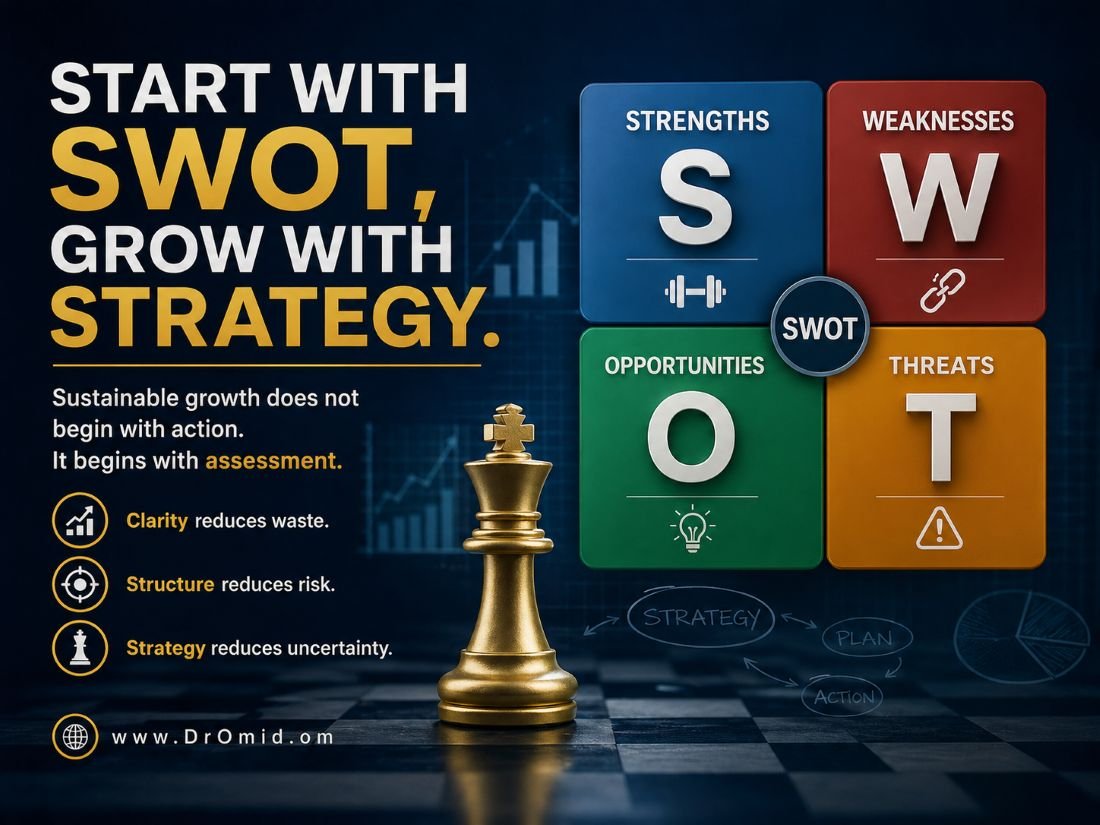

Start with SWOT, Grow with Strategy
April 26, 2026
Export Readiness Starts Before Shipping: Why Product & Packaging Readiness Matter in International Trade
May 3, 2026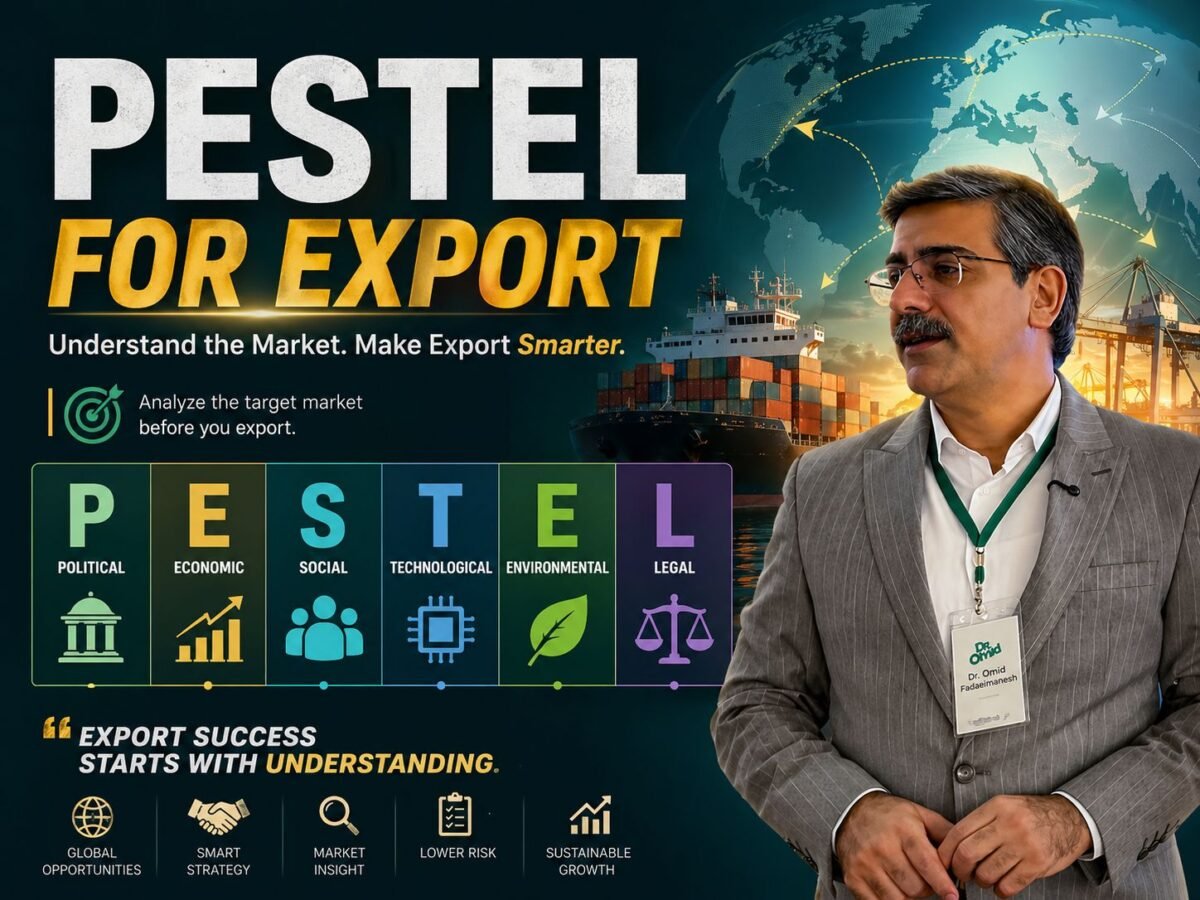
Many businesses assume export begins with a product, a shipment plan, or a distributor.
It does not.
Successful export begins with understanding the market before entering it.
One of the most effective tools for evaluating any export destination is PESTEL analysis. It helps businesses understand the external conditions of a target market before making decisions about entry, investment, pricing, compliance, or positioning.
Before exporting to any country, the question is not only “Can we sell there?”
The real question is: “Do we understand that market well enough to succeed there?”
That is where PESTEL becomes essential.
What Is PESTEL in Export Strategy?
PESTEL is a strategic framework used to analyze six critical external factors in a target market:
- P – Political
- E – Economic
- S – Social
- T – Technological
- E – Environmental
- L – Legal
For exporters, PESTEL helps evaluate the conditions of the destination market — not the home market.
This distinction matters.
If a company in Oman wants to export to Saudi Arabia, the relevant analysis is not Oman’s environment.
It is Saudi Arabia’s political, economic, social, technological, environmental, and legal conditions.
Export success depends on how well a business understands the market it wants to enter.
Why PESTEL Matters Before Export
Many export decisions fail because companies focus too early on product, logistics, and pricing.
They prepare the shipment before they understand the market.
This creates avoidable risk.
A strong export strategy should begin with market intelligence:
- Is the market politically stable?
- Is demand supported by purchasing power?
- Does customer behavior align with the offer?
- Is the market technologically ready?
- Are there environmental standards to meet?
- What legal barriers or compliance requirements exist?
Without this understanding, export becomes guesswork.
With it, export becomes strategy.
1. Political Factors
Political conditions shape market access, trade continuity, and business confidence.
Exporters should assess:
- Political stability
- Trade relations between countries
- Import/export restrictions
- Tariff structures
- Government policy toward foreign suppliers
- Customs efficiency
- Regional diplomatic risks
For example, a product may be commercially attractive in a market, but political tensions or regulatory shifts can delay access or increase risk.
Political alignment matters in export.
2. Economic Factors
A market may be large, but that does not mean it is commercially attractive.
Economic analysis helps determine whether the market can support sustainable demand.
Exporters should evaluate:
- GDP and growth trends
- Purchasing power
- Inflation
- Currency stability
- Cost of market entry
- Price sensitivity
- Sector demand
- Payment behavior and financial reliability
A product may fit a market technically, but fail commercially if pricing does not match purchasing behavior.
Export success depends on economic fit.
3. Social Factors
Markets do not buy products. People do.
That is why social analysis matters.
Exporters need to understand:
- Consumer behavior
- Cultural preferences
- Buying habits
- Trust dynamics
- Language
- Demographics
- Brand perception
- Decision-making behavior
A product that succeeds in one country may fail in another because the customer thinks differently, buys differently, or values differently.
Social understanding reduces market friction.
4. Technological Factors
Technology influences how markets buy, communicate, distribute, and scale.
Exporters should evaluate:
- Digital maturity
- E-commerce adoption
- Logistics infrastructure
- Payment systems
- CRM maturity
- Mobile behavior
- Industrial capability
- Distribution efficiency
A market with strong digital infrastructure may support faster scaling, better customer acquisition, and stronger after-sales systems.
Technology affects execution speed.
5. Environmental Factors
Environmental expectations are no longer optional in international trade.
Exporters must understand:
- Sustainability standards
- Packaging requirements
- Waste regulations
- Carbon expectations
- Energy compliance
- ESG expectations
- Environmental certifications
In many markets, environmental compliance is no longer a competitive advantage. It is a market entry requirement.
Ignoring this can block export access.
6. Legal Factors
Legal factors define what is allowed, what is restricted, and what is required.
Exporters should assess:
- Product compliance
- Import regulations
- Certifications
- Labeling requirements
- Licensing
- Documentation
- Contract enforcement
- Taxation and duties
- Intellectual property protection
Many export failures happen not because of poor products, but because of poor legal preparation.
Legal readiness protects export continuity.
PESTEL Is About the Destination Market
This is where many exporters make the wrong assumption.
They study their own market and assume export logic will transfer.
It will not.
Export decisions must be based on the realities of the destination market.
If you export from Oman to Saudi Arabia, then Saudi Arabia is the market that must be understood.
Its regulations matter.
Its customers matter.
Its economy matters.
Its legal standards matter.
Export strategy begins where the customer is — not where the exporter is.
Final Thought
Export is not simply about moving products across borders.
It is about entering systems, regulations, expectations, and behaviors that already exist in another market.
That is why smart export strategy begins with understanding before action.
Before product.
Before shipping.
Before pricing.
Before expansion.
Start with the market.
Start with PESTEL.